
Precision Welding of Leadwires and Resistor Elements, Wireforms and Glass Tube Cutting for Lighting and Electronics

+1 724.253.3161
info@cit-hadley.com

facebook
blog
youtube

ROHS Compliant Precision Welding of Leadwires
& Resistor Elements, Wireforms, and Glass Tube Cutting
for Lighting and Electronics

Products & Services

Equipment for sale

ISO Certification


Uses of CIT Manufactured Parts

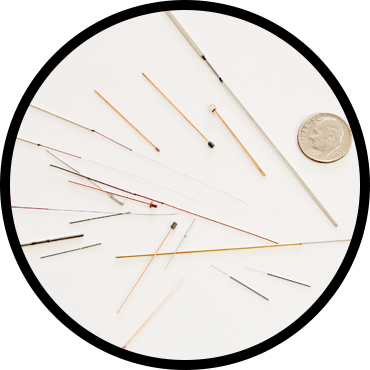
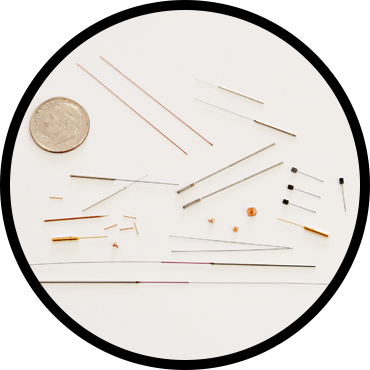
Welded parts manufactured at CIT have wide uses. These include diode leads, lamp leads, resistor elements, and tantalum capacitors.

These parts are packaged in various ways such as round vials, square vials, and different size boxes. With the exception of box packaging, the welder will typically have automatic counting and packaging.

Quality of welded components is controlled by the use of statistical process control (SPC) during manufacture of parts. This process is then checked doubly by a final inspection.

To implement this quality control requires the use of various test instruments and computer testing instruments, including digital micrometers, digital comparators, digital pull testers, digital OHM meters, and computer-controlled part handlers.

All of this equipment is integrated into a complete system via a PC computer network which allows access to process data at any time.

how can we help?
European Sales Representative
Albert N. Pranger
Mobile: 31(0) 62 675 0760
albert.n.pranger@gmail.com


CIT Innovations

CIT Micro Welding: Welding and Forming Very Fine Wires of Various Alloys

The latest technological challenge to CIT is welding and forming very fine wires of various alloys.  There are several projects of this type currently being implemented.

The first project is forming and welding of .0025 inch 304 stainless wires. This project required design of precision tools that formed and controlled these fine wires.  Because the initial  method was resistance welding much of the forming tool was made from ceramic to prevent short circuits during welding.

The challenge of working with the carbon reinforced ceramic is preventing chipping of the tool during grinding. In this case after testing is was determined that resistance welding was not the ideal welding method. The welding method that did work well was fiber laser welding using argon shield gas

micro welding 1


CIT Featured Products

Two and Three Part Halogen Lamp Lead Wires

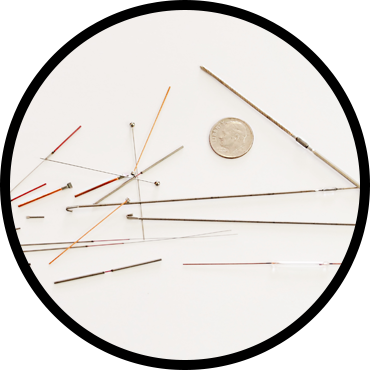
These high quality lead wires are custom made to customer’s specifications for use in a wide range of Halogen lamps

Halogen Lead Lamp Wires
  • Typically Moly or Tungsten wire welded to Nickel plated steel wire or Rolled pins
  • The Moly or Tungsten wire is used to seal to the hard glass envelope of the lamp
  • The Long Center Section three part lead wire is used on automated lamp making machines and is formed in a U shape on the lamp making machine.

Using Arc or Resistance Welding techniques these lead wires are produced on fully automatic welding machines that insure consistency and quality. For more solutions see: Welded Leads for Lighting.

High Intensity Discharge Lamp Lead Wires

High quality HID lead wires are custom made for use in a variety of HID lamps.

HID Lead Lamp Wires
  • The tungsten seal matches the expansion of the hard glass used in the lamp envelope
  • The Nickel or Nickel plated steel inner and outer wires provide strength and corrosion resistance
  • These lead wires can also be provided with a matching glass bead sealed to the tungsten

These lead wires are produced on fully automated welding machines to insure consistency and quality. For more solutions see: Welded Leads for Lighting.


CIT Innovations

Automated Manufacture of 4 Terminal Current Shunts

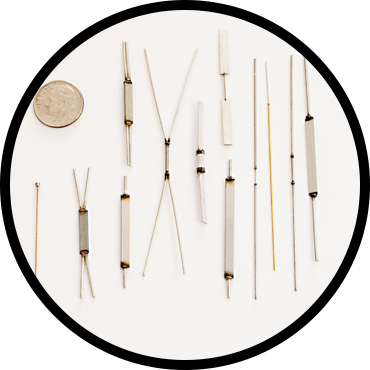
Component InterTechnologies continues to innovate in the field of resistor elements with the newest techniques in automated manufacture of 4 terminal current shunts.

Standard SIP packageThese 4 lead welded assemblies are welded and tested automatically on computer controlled fully automated machines to provide consistent product with resistance tolerances
< 1%. (LEFT: Standard SIP Package)

Standard DIP packageThese elements can be formed and used as Open Air devices or formed and molded into DIP or SIP packages for use in automatic insertion. They can also be molded as axial lead four terminal packages. (LEFT: Standard DIP Package)

Welded Element AssemblyABOVE: Welded Element Assembly

ABOVE: Axial Lead Package

For more solutions see: Metal Resistor Elements